
Last Updated on 15 July 2026
Healthcare has always been one of the most important sectors of the global economy. People need medical care regardless of whether the economy is growing or slowing down, making healthcare companies an essential part of everyday life. From hospitals and pharmaceutical manufacturers to medical device companies and biotechnology innovators, the industry continues to evolve through technological advances and an aging global population.
For investors looking to build long-term wealth, healthcare exchange-traded funds (ETFs) provide an easy way to gain exposure to this broad and diverse sector. Instead of researching and buying dozens of healthcare companies individually, investors can purchase a single ETF that holds many healthcare-related stocks.
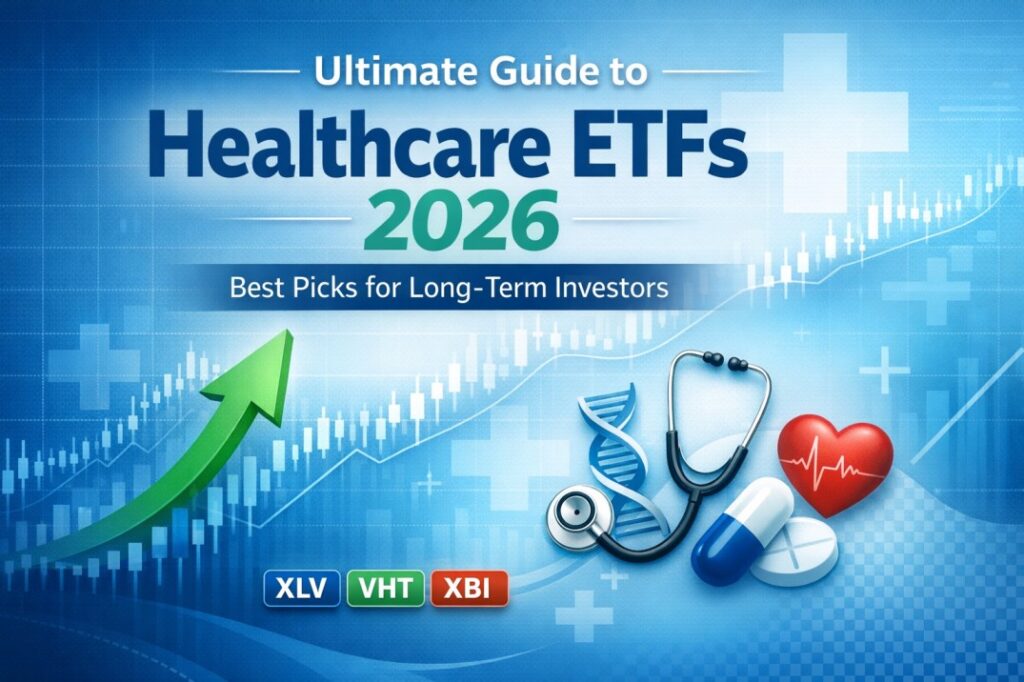
In this Healthcare ETF for Long-Term Investors guide, you’ll learn how healthcare ETFs work, why they have become popular among long-term investors, the different types available, their benefits and risks, and practical tips for choosing an ETF that aligns with your investment goals.
Important: This article is for educational purposes only and should not be considered personalized investment advice. Healthcare ETFs involve market risk, and investors should research any fund carefully before investing.
Why Healthcare ETFs Matter in 2026
The healthcare industry is undergoing rapid transformation. Several long-term trends continue to shape the sector, including:
- An aging population in many developed countries
- Rising healthcare spending worldwide
- Advances in artificial intelligence for healthcare
- Personalized medicine
- Gene therapy and biotechnology innovation
- Increased demand for medical devices
- Expansion of telehealth and digital healthcare services
These trends have attracted the attention of investors who want exposure to businesses that may continue growing over the coming decades.
However, selecting individual healthcare companies can be challenging. Some pharmaceutical companies depend heavily on a few blockbuster drugs, while biotechnology firms often face regulatory uncertainty. Medical device manufacturers may experience changing demand due to new technologies or healthcare policies.
Healthcare ETFs help reduce company-specific risk by spreading investments across many businesses within the healthcare sector.
What Is a Healthcare ETF?
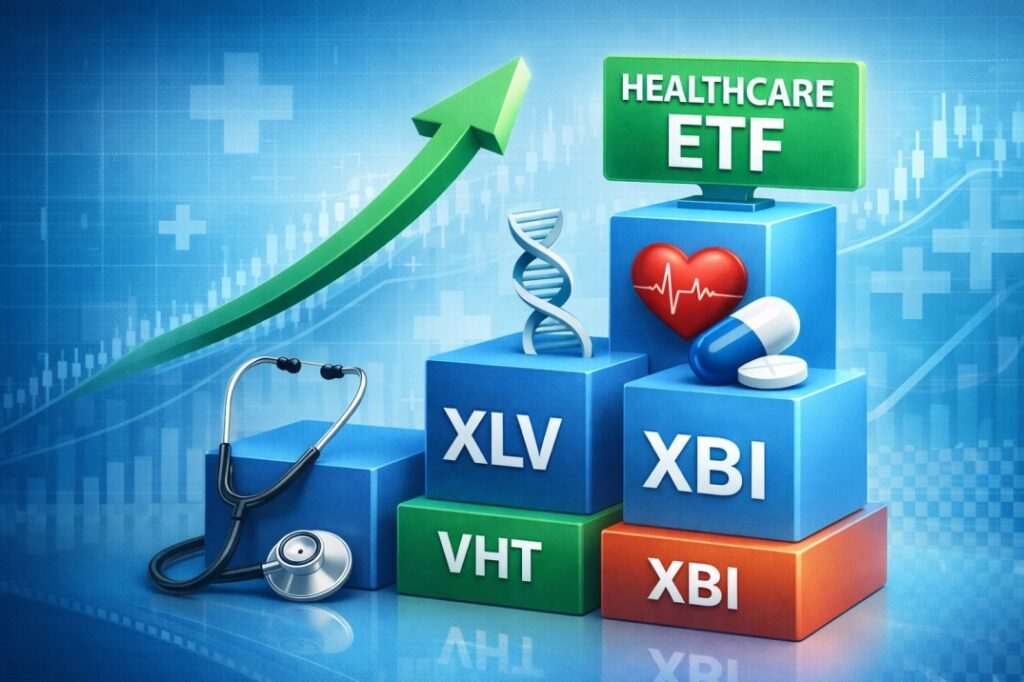
A Healthcare ETF (Exchange-Traded Fund) is an investment fund that owns a collection of healthcare-related stocks. Rather than purchasing shares of individual companies, investors buy one ETF that represents a diversified basket of businesses operating within the healthcare industry.
Like other ETFs, healthcare ETFs trade on stock exchanges throughout the trading day, allowing investors to buy and sell shares at market prices.
Depending on the fund’s objective, a healthcare ETF may invest in:
- Pharmaceutical companies
- Biotechnology firms
- Medical equipment manufacturers
- Health insurance providers
- Hospitals
- Healthcare service companies
- Diagnostics businesses
- Life sciences companies
This diversification makes healthcare ETFs attractive for investors who want exposure to the sector without relying on the performance of a single company.
How Does a Healthcare ETF Work?
Understanding how healthcare ETFs work is relatively simple.
The ETF provider creates a fund that tracks either:
- A healthcare stock index
- A group of selected healthcare companies
- A specialized healthcare theme
When you invest in the ETF, your money is distributed across all the companies included in that fund according to its methodology.
For example:
Imagine an ETF holding 80 healthcare companies.
Instead of investing separately in all 80 businesses, purchasing one share of the ETF provides exposure to the entire portfolio.
This approach offers several advantages:
- Greater diversification
- Lower company-specific risk
- Simpler portfolio management
- Lower transaction costs compared to buying dozens of individual stocks
Why Long-Term Investors Like Healthcare ETFs
Healthcare has historically been viewed as one of the more resilient sectors because medical care remains essential regardless of economic conditions.
Although healthcare companies are not immune to market declines, many continue generating revenue during recessions because people still require:
- Prescription medications
- Medical treatments
- Surgeries
- Diagnostic testing
- Health insurance
- Hospital services
Long-term investors often appreciate healthcare ETFs because they combine:
Diversification
One investment provides exposure to many companies.
Innovation Potential
Healthcare companies continue investing heavily in:
- Cancer treatments
- Artificial intelligence
- Robotics
- Gene editing
- Precision medicine
- Wearable medical technology
Stable Demand
Healthcare demand is driven by demographics rather than consumer trends alone.
Portfolio Balance
Many investors include healthcare alongside technology, financials, industrials, and consumer sectors to create a more diversified investment portfolio.
Understanding the Healthcare Industry
Healthcare is much broader than pharmaceutical companies. The sector consists of several industries, each responding differently to economic conditions and innovation.
| Healthcare Segment | What It Does | Examples of Businesses |
|---|---|---|
| Pharmaceuticals | Develops and sells medicines | Prescription drug manufacturers |
| Biotechnology | Researches innovative therapies | Gene therapy and biotech companies |
| Medical Devices | Manufactures healthcare equipment | Surgical tools, imaging devices, implants |
| Healthcare Providers | Delivers medical services | Hospitals and clinics |
| Health Insurance | Provides health coverage | Managed care organizations |
| Diagnostics | Medical testing and laboratory services | Diagnostic labs and testing companies |
| Life Sciences | Research equipment and laboratory technology | Scientific equipment providers |
A broad healthcare ETF may include companies from all these industries, while a specialized ETF may focus on only one segment.
Types of Healthcare ETFs
Not all healthcare ETFs invest in the same way. Understanding the different categories can help investors choose a fund that matches their goals and risk tolerance.
1. Broad Healthcare ETFs
Broad healthcare ETFs invest across the entire healthcare industry, including pharmaceuticals, biotechnology, medical devices, healthcare services, and insurers.
These funds are often considered suitable for investors seeking diversified exposure without concentrating on one niche.
Potential advantages
- Better diversification
- Lower concentration risk
- Suitable for many long-term investors
- Exposure to multiple healthcare industries
2. Biotechnology ETFs
Biotechnology ETFs primarily invest in companies researching and developing innovative medical treatments, vaccines, and gene-based therapies.
Because many biotechnology firms depend on successful clinical trials and regulatory approvals, these ETFs can experience higher price volatility than broader healthcare funds.
Potential characteristics
- Higher growth potential
- Higher volatility
- Greater research and development exposure
- Sensitive to regulatory decisions
3. Pharmaceutical ETFs
Pharmaceutical ETFs focus on companies that develop, manufacture, and distribute prescription drugs and vaccines.
Many large pharmaceutical companies generate recurring revenue from established products, although they may also face challenges such as patent expirations and pricing pressures.
These ETFs may appeal to investors seeking exposure to well-established healthcare businesses while understanding that industry dynamics can change over time.
4. Medical Device ETFs
Medical device ETFs invest in companies that design, manufacture, and sell equipment used by hospitals, clinics, laboratories, and healthcare professionals.
These businesses often benefit from increasing demand for advanced medical technology as healthcare systems modernize and populations age.
Examples of products include:
- Surgical robots
- MRI and CT scanners
- Pacemakers
- Artificial joints
- Heart valves
- Blood glucose monitors
- Wearable health devices
Why investors consider medical device ETFs
Medical device companies typically generate revenue from products that healthcare providers rely on daily. Unlike pharmaceutical companies, they are generally less dependent on the success of a single drug, although they still face competition, innovation risks, and regulatory oversight.
Potential advantages include:
- Growing demand for medical technology
- Continuous product innovation
- Global expansion opportunities
- Exposure to both established and emerging companies
5. Healthcare Services ETFs
Healthcare services ETFs focus on companies that provide medical care rather than developing medicines or manufacturing equipment.
These ETFs may include:
- Hospitals
- Outpatient care providers
- Dialysis centers
- Diagnostic laboratories
- Home healthcare companies
- Healthcare staffing businesses
As healthcare needs continue to grow, many investors view service providers as an important part of the industry’s long-term development.
However, profitability in this segment can be influenced by labor costs, insurance reimbursement rates, and healthcare regulations.
6. Health Insurance ETFs
Some healthcare ETFs include companies involved in health insurance and managed care.
These businesses help individuals and employers manage healthcare costs by providing insurance coverage and healthcare plans.
Factors that can influence this industry include:
- Government healthcare policies
- Medical cost inflation
- Enrollment growth
- Changes in reimbursement rules
Although insurance companies are generally more mature businesses than many biotechnology firms, they still face regulatory and competitive risks.
7. Active vs. Passive Healthcare ETFs
Healthcare ETFs generally follow one of two investment approaches.
| Feature | Passive Healthcare ETF | Active Healthcare ETF |
|---|---|---|
| Objective | Track a healthcare index | Attempt to outperform the market |
| Portfolio Management | Rules-based | Managed by professional fund managers |
| Trading Activity | Lower | Higher |
| Expense Ratio | Usually lower | Usually higher |
| Holdings | Based on an index | Selected by the investment team |
| Suitable For | Long-term passive investors | Investors seeking active management |
Neither approach is inherently better. The right choice depends on an investor’s objectives, investment philosophy, and willingness to pay higher management fees. Always verify the latest expense ratio and investment strategy from the fund provider, as these details may change over time.
Healthcare ETF vs. Buying Individual Healthcare Stocks
Many beginners wonder whether they should invest in a healthcare ETF or purchase shares of individual healthcare companies.
The answer depends on how much time, experience, and risk they are comfortable with.
| Feature | Healthcare ETF | Individual Healthcare Stocks |
|---|---|---|
| Diversification | High | Low unless many stocks are purchased |
| Company-Specific Risk | Lower | Higher |
| Research Required | Moderate | Extensive |
| Volatility | Usually lower | Can be much higher |
| Investment Cost | One ETF can provide broad exposure | Multiple purchases may be needed |
| Suitable for Beginners | Yes | Generally requires more research |
For investors who are still learning about the healthcare industry, ETFs can offer a simpler way to gain diversified exposure without relying on the performance of a single company.
Benefits of Investing in Healthcare ETFs
Healthcare ETFs have become popular among long-term investors for several reasons. While no investment is risk-free, they offer features that many diversified portfolios can benefit from.
1. Diversification
One of the biggest advantages is diversification.
Instead of investing in one pharmaceutical or biotechnology company, investors gain exposure to dozens—or even hundreds—of healthcare businesses through a single ETF.
This diversification can help reduce the impact if one company performs poorly.
2. Long-Term Growth Potential
Healthcare spending has generally increased over time due to factors such as:
- Population growth
- Longer life expectancy
- Medical innovation
- Rising demand for treatments
- Expansion of healthcare services
While future growth is never guaranteed, these structural trends are one reason many investors include healthcare in long-term portfolios.
3. Exposure to Medical Innovation
Healthcare remains one of the world’s most research-intensive industries.
Companies continue investing in areas such as:
- Artificial intelligence in healthcare
- Gene editing
- Precision medicine
- Cancer therapies
- Robotics
- Remote patient monitoring
- Digital health platforms
Healthcare ETFs allow investors to participate in these broader innovation trends without having to identify individual winners.
4. Defensive Characteristics
Healthcare is often described as a defensive sector because people typically continue seeking medical care regardless of economic conditions.
This does not mean healthcare investments cannot decline during market downturns, but demand for many healthcare products and services tends to be more stable than in some cyclical industries.
5. Professional Portfolio Construction
Most healthcare ETFs follow established investment methodologies or are actively managed by investment professionals.
This saves individual investors from having to constantly monitor dozens of healthcare companies.
6. Easy Access
Healthcare ETFs can generally be bought and sold through standard brokerage accounts, making them accessible to many investors.
Instead of building a portfolio company by company, investors can gain diversified healthcare exposure through a single investment.
Risks of Investing in Healthcare ETFs
Although healthcare is often viewed as a relatively resilient sector, investors should understand the risks before investing.
1. Regulatory Risk
Healthcare companies operate in a highly regulated environment.
Government decisions regarding:
- Drug approvals
- Medical device standards
- Healthcare reimbursement
- Insurance policies
- Pricing regulations
can significantly affect company performance and investor sentiment.
2. Market Risk
Healthcare ETFs are still stock market investments.
During periods of market volatility, ETF prices can decline along with the broader market, even if the underlying businesses remain fundamentally strong.
3. Biotechnology Volatility
ETFs with heavy exposure to biotechnology companies may experience larger price swings.
Clinical trial results, regulatory approvals, and scientific breakthroughs can lead to sharp gains or losses in individual biotech stocks, which may influence ETF performance.
4. Concentration Risk
Some healthcare ETFs concentrate their holdings in a relatively small number of large companies or a specific industry segment.
Investors should review the ETF’s holdings and sector allocation to understand how diversified it truly is.
5. Valuation Risk
At times, healthcare companies may trade at high valuations because investors expect strong future growth.
If those expectations are not met, stock prices may decline even if the companies continue growing.
6. Currency Risk (For International Investors)
Investors outside the United States who purchase U.S.-listed healthcare ETFs may also be affected by changes in exchange rates.
For example, if the U.S. dollar weakens relative to an investor’s home currency, investment returns may be impacted after currency conversion.
Practical Example: Investing Through a Healthcare ETF
Imagine Sarah, a 35-year-old investor, wants to add healthcare exposure to her retirement portfolio.
She has two options:
Option A: Buy Individual Stocks
She purchases shares in three healthcare companies:
- One pharmaceutical company
- One biotechnology company
- One medical device manufacturer
If one of these companies experiences a major setback—such as a failed clinical trial or declining sales—her portfolio could be significantly affected because she owns only a few stocks.
Option B: Buy a Healthcare ETF
Instead, Sarah invests in a diversified healthcare ETF that holds more than 100 companies across multiple healthcare industries.
Her investment is spread across:
- Pharmaceutical companies
- Biotechnology firms
- Medical device manufacturers
- Healthcare service providers
- Health insurers
- Life sciences businesses
While the ETF’s value can still fluctuate with the market, the impact of problems at any single company is generally reduced because the investment is diversified across many holdings.
This example illustrates why many long-term investors use healthcare ETFs as a convenient way to gain broad exposure to the sector while reducing company-specific risk.
How to Choose a Healthcare ETF for Long-Term Investors
Choosing the right healthcare ETF requires more than simply looking at past returns. A fund that performed well in the past may not necessarily deliver similar results in the future.
Long-term investors should focus on factors such as the ETF’s investment strategy, diversification, costs, holdings, and how well it fits into their overall portfolio.
Below are some important factors to consider before investing.
1. Understand the ETF’s Investment Objective
The first step is understanding what the ETF is designed to achieve.
Some healthcare ETFs aim to provide broad exposure to the entire healthcare sector, while others focus on specific areas such as:
- Biotechnology
- Pharmaceuticals
- Medical devices
- Healthcare technology
- Healthcare services
A beginner investor may prefer a broad healthcare ETF because it provides exposure across multiple industries.
Investors with a higher risk tolerance may explore specialized healthcare ETFs, but these can experience greater volatility.
Always read the ETF’s official documents, investment objective, and latest holdings before investing.
2. Review the ETF Holdings
An ETF’s holdings show which companies you actually own through the fund.
Important questions to ask:
- How many companies does the ETF hold?
- Are investments spread across different healthcare industries?
- Does the fund depend heavily on a few companies?
- Are the largest holdings dominating the portfolio?
For example, an ETF with 100 healthcare companies may still have significant concentration if the top five holdings represent a large portion of the fund.
Diversification should be evaluated by both:
- Number of holdings
- Weight of individual holdings
3. Check the Expense Ratio
The expense ratio represents the annual operating cost charged by the ETF provider.
For example:
If an ETF has an expense ratio of 0.10%, an investor pays approximately $1 per year for every $1,000 invested (before considering investment performance).
Lower costs can benefit long-term investors because fees reduce the amount of money that remains invested and compounds over time.
However, investors should not choose an ETF only because it has the lowest expense ratio. A slightly higher-cost ETF may offer a strategy or diversification that better matches an investor’s goals.
Always verify the latest expense ratio from the ETF provider because fees can change.
4. Consider Assets Under Management (AUM)
Assets Under Management (AUM) represent the total amount of money invested in the ETF.
A larger AUM can sometimes indicate:
- Greater investor interest
- Better liquidity
- Longer operating history
However, a smaller ETF is not automatically a bad investment.
Investors should consider AUM along with:
- Trading volume
- Fund history
- ETF provider reputation
- Investment strategy
5. Evaluate Liquidity and Trading Volume
Liquidity refers to how easily an ETF can be bought or sold without significantly affecting its price.
Generally, ETFs with higher trading activity may have:
- Smaller bid-ask spreads
- Easier buying and selling
- Better price efficiency
This is especially important for investors who frequently trade ETFs.
For long-term investors who plan to hold for many years, liquidity may be less important than factors such as diversification and costs.
6. Look at the ETF Provider
The reputation and experience of the ETF provider can matter.
Established ETF providers generally have:
- Transparent fund information
- Regular reporting
- Clear investment methodologies
- Professional fund management systems
Investors should review the provider’s website and official documents before making investment decisions.
Important Factors to Compare Before Investing
| Factor | Why It Matters |
|---|---|
| Investment Objective | Helps determine whether the ETF matches your goals |
| Holdings | Shows the companies and industries you are investing in |
| Expense Ratio | Lower costs can support long-term compounding |
| AUM | Provides insight into fund size and investor interest |
| Liquidity | Affects buying and selling efficiency |
| Diversification | Helps reduce dependence on individual companies |
| Historical Performance | Shows past results but does not predict future returns |
Healthcare ETF Portfolio Allocation for Long-Term Investors
One common question investors ask is:
“How much of my portfolio should I allocate to healthcare ETFs?”
There is no universal answer because allocation depends on:
- Investment goals
- Risk tolerance
- Existing portfolio
- Time horizon
- Financial situation
Healthcare ETFs are usually considered a sector investment, meaning they focus on one part of the economy.
Because of this, many investors avoid making any single sector too large a portion of their portfolio.
For example:
A diversified portfolio may include exposure to:
- Broad market ETFs
- International investments
- Bonds
- Real estate investments
- Sector ETFs such as healthcare
The purpose of sector ETFs is generally to add diversification or targeted exposure, not necessarily to replace a complete investment strategy.
Also read about VOO Stock: The Ultimate Guide to Vanguard’s Most Popular ETF
Healthcare ETF vs. Broad Market ETF
Many beginners wonder whether they should choose a healthcare ETF or a broad market ETF.
Both serve different purposes.
| Feature | Healthcare ETF | Broad Market ETF |
|---|---|---|
| Focus | Healthcare companies only | Companies across many industries |
| Diversification | Sector-specific | Economy-wide |
| Growth Drivers | Healthcare trends and innovation | Overall market growth |
| Risk Level | Can be higher due to sector concentration | Usually more diversified |
| Purpose | Add healthcare exposure | Core portfolio investment |
A healthcare ETF may work well as a portfolio addition, while broad market ETFs are often used as a foundation by many long-term investors.
Pros and Cons of Healthcare ETFs
Pros of Healthcare ETFs
1. Simple Healthcare Exposure
Investors can gain exposure to hundreds of healthcare companies through one investment.
2. Reduced Individual Stock Risk
A single company’s poor performance may have a smaller impact because the ETF owns many companies.
3. Access to Innovation
Healthcare ETFs provide exposure to companies working on:
- New medicines
- Advanced treatments
- Medical technology
- Healthcare solutions
4. Suitable for Long-Term Themes
Healthcare demand may continue growing due to demographic and technological trends.
5. Beginner-Friendly
Investors do not need to analyze every healthcare company individually.
Read about Top Rated Gold ETF
Cons of Healthcare ETFs
1. Sector Concentration Risk
Healthcare ETFs focus on one industry, which means they may underperform when the healthcare sector struggles.
2. Regulatory Uncertainty
Government policies and healthcare regulations can significantly influence the industry.
3. No Guaranteed Returns
Like all equity investments, healthcare ETFs can lose value.
4. May Miss Individual Winners
Because ETFs own many companies, they may not experience the same gains as a single successful healthcare company.
5. Specialized ETFs Can Be Volatile
Biotechnology-focused ETFs, in particular, can experience large price movements.
Read about Silver ETF Investment Guide
Who Should Consider Healthcare ETFs?
Healthcare ETFs may be suitable for investors who:
Have a Long-Term Investment Horizon
Investors who plan to stay invested for many years may be better positioned to handle short-term market fluctuations.
Want Sector Diversification
Investors who already own broad market funds may use healthcare ETFs to add exposure to the healthcare industry.
Prefer Diversification Over Stock Picking
Those who do not want to research individual healthcare companies may find ETFs easier to manage.
Believe in Long-Term Healthcare Trends
Investors interested in healthcare innovation and demographic changes may consider adding healthcare exposure to their portfolios.
Who Should Avoid Healthcare ETFs?
Healthcare ETFs may not be suitable for everyone.
Investors should be cautious if they:
Need Short-Term Guaranteed Returns
Healthcare ETFs are stock market investments and can decline in value.
Cannot Handle Market Volatility
Sector-focused funds can experience periods of underperformance.
Already Have Heavy Healthcare Exposure
Investors should review their existing investments to avoid excessive concentration.
Do Not Understand ETF Risks
Investors should understand how ETFs work before investing money.
Common Mistakes When Investing in Healthcare ETFs
1. Buying Based Only on Past Returns
A healthcare ETF with excellent historical performance may not repeat those results.
Past performance does not guarantee future returns.
2. Ignoring Fund Costs
Small differences in expenses can affect long-term investment results.
Always compare expense ratios and understand what you are paying for.
3. Overconcentrating in One Sector
Healthcare can be an important portfolio component, but relying only on one sector increases risk.
4. Not Understanding Holdings
Some investors buy an ETF because of its name without checking what companies it actually owns.
Always review the latest holdings.
5. Expecting Quick Profits
Healthcare investing often requires patience.
Medical innovation and business growth can take years to develop.
For detailed information about Complete Guide to ETF Investing for Beginners
Frequently Asked Questions (FAQs)
1. What is a healthcare ETF?
A healthcare ETF is an exchange-traded fund that invests in a group of healthcare-related companies. These companies may include pharmaceutical businesses, biotechnology firms, medical device manufacturers, hospitals, healthcare service providers, and health insurance companies.
Instead of buying individual healthcare stocks, investors can buy one ETF that provides exposure to multiple healthcare companies.
2. Are healthcare ETFs good for long-term investors?
Healthcare ETFs can be suitable for some long-term investors because the healthcare industry benefits from long-term trends such as an aging population, medical innovation, and increasing healthcare demand.
However, healthcare ETFs are still equity investments and can lose value during market declines. Investors should evaluate their own goals, risk tolerance, and overall portfolio before investing.
3. Are healthcare ETFs safer than individual healthcare stocks?
Healthcare ETFs are generally considered less risky than owning a small number of individual healthcare stocks because they provide diversification across many companies.
For example, if one pharmaceutical company faces a failed drug trial, the impact may be limited if the ETF owns many other healthcare businesses.
However, healthcare ETFs still carry market risk and can decline in value.
4. What types of companies are included in healthcare ETFs?
Healthcare ETFs may include companies from several areas, including:
- Pharmaceutical manufacturers
- Biotechnology companies
- Medical device companies
- Hospitals and healthcare providers
- Health insurance businesses
- Diagnostic companies
- Healthcare technology firms
The exact holdings depend on the ETF’s investment strategy.
5. Can healthcare ETFs provide dividend income?
Some healthcare ETFs may provide dividend income because they hold companies that distribute dividends.
However, dividend payments are not guaranteed and may change over time.
Investors should review the ETF’s dividend history, current yield, and underlying holdings before investing.
6. Are biotechnology ETFs different from healthcare ETFs?
Yes. Biotechnology ETFs are a specialized category within healthcare investing.
While broad healthcare ETFs may include pharmaceutical companies, medical device manufacturers, insurers, and healthcare providers, biotechnology ETFs typically focus more heavily on companies developing new medical treatments and technologies.
Biotechnology ETFs can experience higher volatility because they are often influenced by clinical trial results and regulatory approvals.
7. How do I choose the best healthcare ETF for long-term investing?
Investors should consider several factors:
- Investment objective
- Diversification
- Number of holdings
- Expense ratio
- Fund size (AUM)
- Liquidity
- ETF provider reputation
- Portfolio fit
There is no single “best” healthcare ETF for everyone. The right choice depends on an investor’s goals and risk tolerance.
8. Can healthcare ETFs lose money?
Yes. Healthcare ETFs can lose money.
Although healthcare is often considered a defensive sector, healthcare companies are still affected by:
- Market downturns
- Interest rates
- Regulations
- Competition
- Company earnings
- Investor sentiment
Investors should be prepared for price fluctuations.
9. Should beginners invest in healthcare ETFs?
Healthcare ETFs can be beginner-friendly because they provide diversified exposure without requiring investors to analyze dozens of individual healthcare companies.
However, beginners should first understand:
- How ETFs work
- Investment risks
- Their own financial goals
- Portfolio diversification
Starting with education and research is important before investing.
10. How long should I hold a healthcare ETF?
Healthcare ETFs are generally considered long-term investments rather than short-term trading tools.
Many investors consider holding periods of several years or longer because business growth, healthcare innovation, and demographic trends often develop gradually.
The appropriate holding period depends on individual financial goals and circumstances.
Conclusion: Is a Healthcare ETF Right for Long-Term Investors?
Healthcare continues to be one of the most important sectors in the global economy. From life-saving medicines and advanced medical devices to digital healthcare solutions and biotechnology breakthroughs, the industry plays a critical role in improving people’s lives.
For long-term investors, healthcare ETFs offer a convenient way to gain exposure to this sector without selecting individual companies. They provide diversification across multiple healthcare industries and allow investors to participate in long-term healthcare trends.
However, healthcare ETFs are not risk-free investments. Regulatory changes, market volatility, healthcare policy decisions, and company-specific challenges can affect performance.
A thoughtful investor should focus on:
- Understanding the ETF’s investment strategy
- Reviewing holdings and diversification
- Comparing costs
- Considering portfolio allocation
- Maintaining a long-term perspective
Healthcare ETFs can be a valuable addition to a diversified investment portfolio, but they should be viewed as one part of an overall investment plan rather than a guaranteed path to returns.
Before investing, always conduct your own research and review the latest information from official ETF providers and financial resources.
May also read abut ETF vs Index Fund Which is Better in India
Key Takeaways
- Healthcare ETFs invest in a diversified portfolio of healthcare-related companies.
- They offer exposure to pharmaceuticals, biotechnology, hospitals, medical devices, healthcare services, and life sciences.
- Healthcare is generally considered a defensive sector because demand for medical care remains relatively stable.
- Long-term investors often use healthcare ETFs to diversify their portfolios.
- Different healthcare ETFs focus on different areas, such as broad healthcare exposure or specialized industries like biotechnology.
- Healthcare ETFs still carry market risk and may be affected by regulations, drug approvals, and economic conditions.
- Always review an ETF’s investment objective, holdings, expense ratio, and risk profile before investing. These details may change over time, so verify the latest information from the fund provider.
Also read about Best Emerging Market Value ETFs for Long-Term Investment
Note: ETF holdings, expense ratios, assets under management, and fund strategies can change over time. Investors should verify current information directly from official sources before making investment decisions.
Author’s Note: I’ve been investing in mutual funds and stocks since 2018 and have practical experience in business and personal finance. While I’m not a licensed financial advisor or investment professional, I write educational content based on years of hands-on investing experience, business knowledge, extensive research, and reliable sources. My goal through TheInvestorStory.com is to simplify investing, personal finance, business, and financial concepts so readers can make more informed financial decisions.
Disclaimer: The content provided is for educational and informational purposes only and should not be considered financial, investment, insurance, or legal advice.