

Last Updated on 16 February 2026
Complete Guide to ETF Investing for Beginners
Investing used to feel complicated and intimidating for most people. Many beginners believed they needed large amounts of money or deep financial knowledge to start investing. Thankfully, modern investment tools like Exchange Traded Funds (ETFs) have changed the game completely. ETF investing for beginners will help you understand ETFs in simple language and show you how to start investing confidently.
If you are looking for low-cost, diversified, and beginner-friendly investments, ETFs are often considered one of the smartest options available today. Even global investment leaders like Vanguard have promoted ETFs as powerful tools for long-term wealth building.
Let’s explore everything you need to know about ETF investing step-by-step.
What is an ETF?
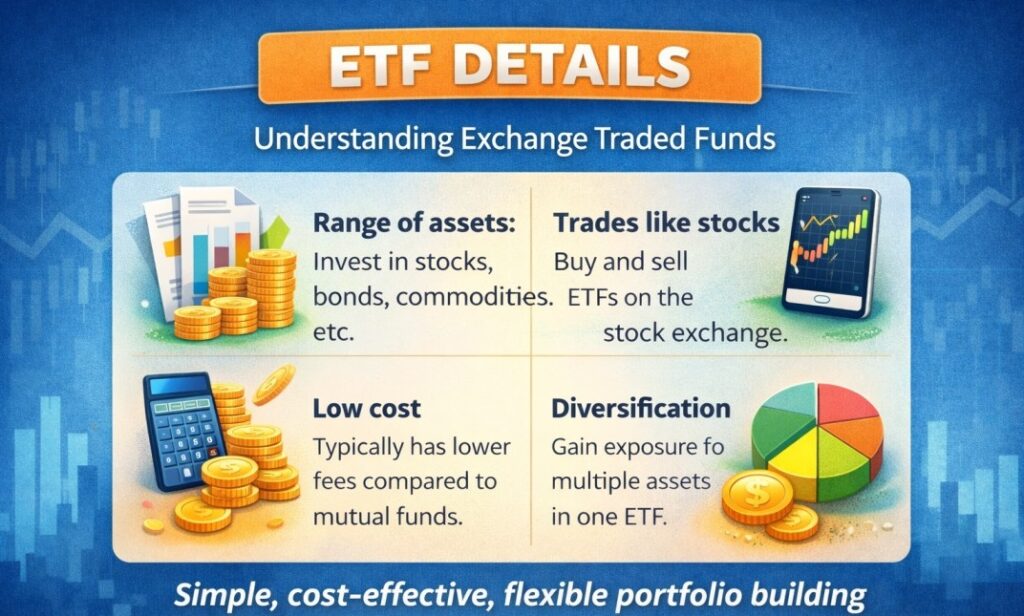
An Exchange Traded Fund (ETF) is a type of investment fund that holds multiple assets such as stocks, bonds, or commodities. ETFs trade on stock exchanges just like individual stocks, which means you can buy or sell them anytime during market hours.
Instead of purchasing shares of individual companies, ETFs allow you to invest in a basket of assets with a single purchase. Financial education platforms like Investopedia describe ETFs as a simple way to gain diversification while keeping investment costs low.
Example:
If you buy a stock ETF that tracks the Nifty 50 index, you are indirectly investing in the top 50 companies of India.
Why ETFs Are Perfect for Beginners
ETFs have become extremely popular among new investors for several reasons.
1. Diversification
Buying one ETF gives exposure to multiple companies or sectors, which reduces risk compared to investing in individual stocks.
2. Low Investment Cost
Most ETFs have lower expense ratios compared to actively managed mutual funds. Lower costs mean higher long-term returns.
3. Easy Trading
ETFs can be bought and sold just like stocks, offering flexibility and convenience.
4. Transparency
Most ETFs disclose their holdings daily, allowing investors to know exactly where their money is invested.
5. Tax Efficiency
ETFs are generally more tax efficient than traditional funds due to their structure.
Types of ETFs Beginners Should Know
Understanding ETF types helps investors choose funds that match their financial goals.
Stock ETFs
These ETFs track stock market indexes like large-cap or small-cap companies. They are ideal for long-term wealth creation.
Bond ETFs
Bond ETFs invest in government or corporate bonds and provide stable income with lower risk.
Commodity ETFs
These ETFs track commodities like gold, silver, or natural gas. They help investors diversify portfolios beyond stocks.
Sector ETFs
Sector ETFs focus on specific industries like technology, healthcare, or banking.
International ETFs
These ETFs allow investors to invest in global markets without opening foreign trading accounts.
Thematic ETFs
Thematic ETFs invest in future-focused sectors such as renewable energy or artificial intelligence.
ETF vs Mutual Fund vs Stocks
Understanding the difference between ETFs, mutual funds, and individual stocks helps beginners make better investment decisions.
| Feature | ETF | Mutual Fund | Individual Stock |
|---|---|---|---|
| Trading Flexibility | High | Low | High |
| Diversification | High | High | Low |
| Cost | Low | Medium to High | Low |
| Risk Level | Moderate | Moderate | High |
| Investment Control | Medium | Low | High |
ETFs combine diversification benefits of mutual funds with trading flexibility of stocks.
How ETFs Work
ETFs track indexes or asset classes by holding similar securities. When the value of underlying assets changes, ETF prices also move accordingly.
Large financial institutions create or redeem ETF shares to maintain price balance. This process helps ETFs stay close to their actual asset value.
For beginners, the technical details are less important than understanding that ETFs simply follow the performance of specific markets or sectors.
Also know detailed information about Silver ETF
Step-by-Step Guide to Investing in ETFs
Step 1: Set Investment Goals
Decide why you want to invest. Your goal could be retirement, passive income, or wealth creation.
Step 2: Choose Investment Platform
Open a brokerage account that allows ETF trading.
Step 3: Research ETFs
Evaluate ETFs based on:
- Expense ratio
- Fund size
- Performance history
- Tracking accuracy
- Liquidity
Step 4: Decide Investment Strategy
You can invest lump sum or use SIP-style investing (Systematic Investment Plan).
Step 5: Place Your Order
You can buy ETFs using market orders or limit orders.
Step 6: Monitor and Rebalance
Review your portfolio once or twice per year to maintain balance.
How to Choose the Right ETF
Choosing the right ETF is the most important step for beginners.
Check Expense Ratio
Lower expense ratios improve long-term returns.
Review Fund Holdings
Understand what companies or assets the ETF includes.
Analyze Liquidity
Higher trading volume ensures easy buying and selling.
Study Historical Performance
Past performance does not guarantee future results but provides insights into fund stability.
Understand Risk Level
Some ETFs are volatile, especially sector or leveraged ETFs.
Popular ETF Investment Strategies for Beginners
1. Passive Index Investing
Investing in index ETFs tracking large market indexes is the most popular beginner strategy.
2. Diversified Portfolio Strategy
Combining stock ETFs, bond ETFs, and commodity ETFs helps reduce risk.
3. Long-Term Wealth Strategy
Holding ETFs for 10-20 years allows compounding to work effectively.
4. Dividend Income Strategy
Some ETFs focus on dividend-paying companies and provide regular income.
Advantages of ETF Investing
ETFs provide several long-term benefits:
- Low management cost
- Easy diversification
- High transparency
- Trading flexibility
- Strong long-term growth potential
- Suitable for small investors
Risks of ETF Investing
Although ETFs are safer than individual stocks, they still involve risks.
Market Risk
ETF prices move with market fluctuations.
Sector Concentration Risk
Sector ETFs can be volatile.
Liquidity Risk
Some niche ETFs may have low trading volumes.
Tracking Error
ETFs may slightly differ from index performance.
Understanding these risks helps investors make smarter decisions.
Cost Factors in ETF Investing
Cost plays a major role in investment success.
Expense Ratio
Annual fee charged by the ETF provider.
Brokerage Charges
Some brokers charge trading fees.
Bid-Ask Spread
Difference between buying and selling price.
Lower costs significantly increase long-term profits.
Taxation of ETFs
Tax treatment varies depending on country and ETF type.
Generally:
- Equity ETFs may have capital gains tax
- Commodity ETFs may follow different tax rules
- Dividend ETFs may attract income tax
Investors should check local tax regulations before investing.
Beginner ETF Portfolio Example
Here is a simple diversified ETF portfolio for beginners:
| Asset Type | Allocation |
|---|---|
| Stock Market ETF | 60% |
| International ETF | 20% |
| Bond ETF | 15% |
| Gold ETF | 5% |
Detailed information about best Gold ETF
This type of portfolio balances growth and stability.
Common ETF Investing Mistakes Beginners Make
Chasing High Returns
Investors often buy ETFs after they perform well, which can lead to losses.
Ignoring Costs
Even small fees can reduce long-term returns.
Overtrading
Frequent buying and selling reduces profits.
Lack of Diversification
Investing only in one sector increases risk.
Tips for Successful ETF Investing
- Start early and invest consistently
- Focus on long-term goals
- Diversify across asset classes
- Avoid emotional investing
- Rebalance portfolio periodically
Successful ETF investors focus more on discipline than market timing.
Future of ETF Investing
ETF popularity continues to grow worldwide. Investors are increasingly choosing ETFs because of low costs, transparency, and flexibility.
The rise of thematic and global ETFs is providing investors access to new opportunities such as renewable energy, artificial intelligence, and emerging markets.
ETFs are expected to remain one of the fastest-growing investment products in the coming decades.
Key Takeaways
- ETFs are beginner-friendly investment tools
- They provide diversification and low cost investing
- Long-term ETF investing builds wealth effectively
- Choosing low-expense and diversified ETFs improves returns
- Discipline and consistency are key to investment success
Conclusion
ETFs have made investing simple, affordable, and accessible for everyone. This complete guide to ETF investing for beginners shows that you do not need advanced financial knowledge to start building wealth.
By understanding ETF basics, selecting the right funds, and following disciplined strategies, beginners can create strong investment portfolios that grow steadily over time.
ETFs are not a shortcut to instant riches, but they are one of the safest and most reliable paths toward long-term financial freedom.
Disclaimer: The content provided is for educational and informational purposes only and should not be considered financial, investment, insurance, or legal advice.




Pingback: ETF vs Index Fund Which is Better in India? Complete Guide
Pingback: High Return Investment Options in 2026: 12 Smart Ways for wealth