
Introduction: Why Every European Founder Should Understand the EIF in 2026
Raising capital in 2026 isn’t just about pitching venture capitalists or negotiating bank loans. It’s about understanding the ecosystem behind the ecosystem. If you’re a startup founder or SME owner in Europe, knowing European Investment Fund can dramatically increase your chances of securing funding – even if you never apply directly to the EIF itself.
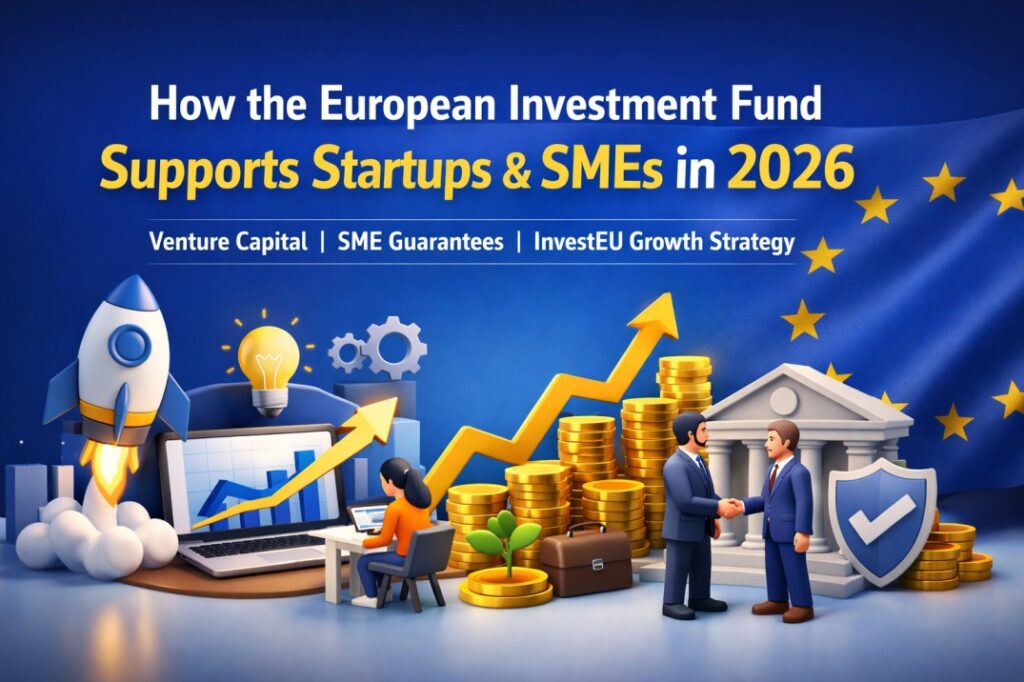
That’s because the European Investment Fund (EIF) works behind the scenes. It backs venture capital funds, guarantees SME loans, and supports innovative businesses through EU-backed programs like InvestEU.
In this in-depth 2026 guide, we’ll break down:
- What the EIF actually does
- How it differs from the European Investment Bank
- The real funding channels startups can access
- Strategic insights for founders and SME owners
- What’s changing in 2026 and beyond
Let’s dive in.
What Is the European Investment Fund?
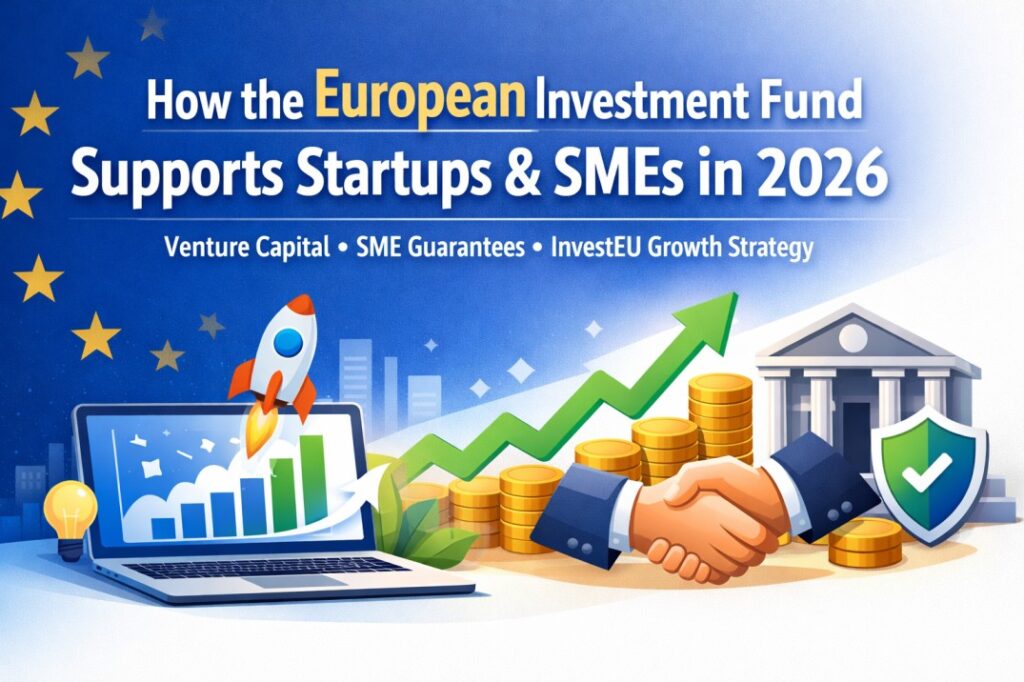
The European Investment Fund is part of the EIB Group and focuses specifically on small and medium-sized enterprises (SMEs) and startups.
Unlike traditional banks, the EIF rarely funds companies directly. Instead, it acts as a financial multiplier by:
- Investing in venture capital and private equity funds
- Providing guarantees to banks that lend to SMEs
- Supporting securitization programs
- Managing EU mandates aimed at innovation and growth
In simple terms:
👉 The EIF strengthens the institutions that finance startups – making capital more accessible across Europe.
How the European Investment Fund Supports Startups and SMEs
Understanding how the European Investment Fund supports startups and SMEs requires looking at its core financial instruments.
1. Venture Capital & Equity Investments
The EIF is one of Europe’s largest investors in venture capital funds.
How It Works:
- EIF invests in VC funds as an anchor limited partner (LP).
- This reduces risk for private investors.
- More capital flows into startups.
Why This Matters for Founders:
When the EIF backs a VC fund:
- Fund size increases
- More startups get funded
- Follow-on rounds become easier
- International investors gain confidence
In 2026, EIF continues prioritizing:
- Climate tech
- Deep tech
- AI & digital transformation
- Health innovation
- Regional innovation ecosystems
Founder Insight:
If a VC fund mentions “EIF-backed” or “InvestEU-supported,” that’s often a positive signal of institutional strength.
2. SME Loan Guarantees (The Hidden Growth Engine)
Many SMEs struggle not because of lack of customers – but lack of affordable credit.
Here’s where EIF guarantees change the game.
What Are EIF Guarantees?
The EIF provides risk-sharing agreements to banks and alternative lenders. This allows them to:
- Approve more SME loans
- Offer better interest rates
- Reduce collateral requirements
- Finance innovative but riskier companies
Example:
If your bank offers an “EU-backed SME loan,” it’s likely supported by EIF.
This means:
- Lower lending risk for the bank
- Higher approval probability for you
For traditional SMEs – manufacturers, service providers, exporters – this tool is often more impactful than venture capital.
3. InvestEU: Strategic Capital for 2026 Priorities
One of the most important frameworks today is InvestEU.
Through InvestEU, the EIF deploys funding into priority sectors such as:
- Green transition
- Energy efficiency
- Digital infrastructure
- Social impact
- Strategic technologies
The program blends EU budget guarantees with private capital, creating a powerful multiplier effect.
For startups aligned with sustainability or digital innovation, InvestEU-backed funds are particularly relevant in 2026.
EIF vs European Investment Bank (EIB): What’s the Difference?
| Feature | European Investment Fund | European Investment Bank |
|---|---|---|
| Focus | SMEs & Startups | Large infrastructure & corporate projects |
| Funding Type | VC funds, guarantees | Direct loans |
| Direct Company Lending | Rare | Yes |
| Risk Level | Higher (innovation focused) | Lower (large projects) |
Think of it this way:
- EIB finances highways, renewable plants, and large corporations.
- EIF finances the startups building tomorrow’s industries.
Together, they form the backbone of Europe’s public investment ecosystem.
Why the EIF Model Works (A Fresh Perspective)
Unlike traditional grant-based systems, the EIF doesn’t distort markets – it catalyzes them.
Here’s what makes the model powerful:
1. Multiplier Effect
Every €1 from EIF often attracts multiple euros from private investors.
2. Risk Sharing Instead of Subsidizing
Instead of giving money away, EIF shares risk. This encourages sustainable lending.
3. Market Development
By anchoring first-time VC funds in smaller regions, EIF strengthens local ecosystems.
For example, regional innovation funds in the Baltics, Southern Europe, and Central Europe have grown significantly due to EIF participation.
Who Benefits the Most in 2026?
Not all businesses benefit equally. Here’s who gains the most:
High-Growth Startups
- Deep tech
- Climate innovation
- AI platforms
- MedTech
Regional SMEs
Companies in less-developed EU regions often receive stronger support.
Scale-Ups
Companies beyond seed stage looking for Series B+ funding benefit from EIF-backed growth funds.
Traditional SMEs
Through loan guarantees and securitization programs.
How to Access EIF-Backed Financing (Step-by-Step)
Even though you can’t typically apply directly to EIF, you can benefit strategically.
Step 1: Identify EIF-Backed VC Funds
Search fund websites for mentions of:
- EIF
- InvestEU
- EIB Group
Step 2: Ask Your Bank
Inquire whether SME loans are:
- EU-guaranteed
- InvestEU-backed
- EIF-supported
Step 3: Align Your Pitch
Investors backed by EIF often prioritize:
- ESG alignment
- Innovation
- Regional development
- Long-term sustainability
Step 4: Use National Promotional Banks
Many EU countries have development banks that collaborate with EIF.
Key Insights for Founders in 2026
Here are strategic insights beyond generic advice:
🔹 Policy Alignment Is Now Critical
Your startup’s narrative should align with EU priorities:
- Climate neutrality
- Digital sovereignty
- Strategic autonomy
🔹 Institutional Capital Is Growing
Pension funds and insurance capital increasingly flow into EIF-backed VC structures.
🔹 Late-Stage Funding Is Improving
Europe historically lacked growth capital. EIF’s newer initiatives are targeting this gap.
🔹 Bank Lending Is Quietly Expanding
Many SMEs don’t realize that approval rates have improved due to EIF guarantees.
Challenges and Limitations
While powerful, the EIF system isn’t perfect.
- Complex bureaucracy
- Indirect access
- Regional differences
- Strict compliance requirements
Startups must remain patient and well-prepared.
2026 Trends to Watch
1. Deep Tech Acceleration
AI, semiconductors, and advanced manufacturing are strategic priorities.
2. Climate Finance Expansion
Green venture capital is expanding rapidly under EU mandates.
3. Scale-Up Retention
Efforts to prevent European startups from relocating to the US for late-stage capital.
4. Stronger Public-Private Partnerships
Blended finance structures are increasing.
Why This Matters for Investors
For investors reading this:
- EIF-backed funds often offer downside protection.
- Public anchor LPs enhance credibility.
- Policy alignment reduces regulatory risk.
Understanding how the European Investment Fund supports startups and SMEs helps investors identify stronger opportunities.
Final Thoughts: The Bigger Picture
Europe’s competitiveness depends on innovation, resilience, and financial access.
The European Investment Fund plays a central but often invisible role in that ecosystem.
In 2026, its importance is even greater due to:
- Geopolitical uncertainty
- Energy transition needs
- Technological sovereignty goals
For founders and SMEs, understanding this structure is not optional – it’s strategic.
If you position your company correctly within this ecosystem, you dramatically improve funding probability.
Frequently Asked Questions (FAQ)
Does the EIF give money directly to startups?
Usually no. It invests in funds and provides guarantees to intermediaries.
How can SMEs benefit without venture capital?
Through EIF-backed bank loans and guarantee programs.
Is InvestEU different from EIF?
InvestEU is a program. EIF is an implementing partner.
Is EIF only for EU countries?
Primarily yes, though some neighboring countries may benefit via partnerships.
Conclusion
Understanding European Investment Fund supports startups and SMEs gives founders and business owners a competitive advantage in 2026.
Instead of chasing random funding sources, align yourself with the financial architecture shaping Europe’s future.
Capital flows where policy, innovation, and risk-sharing meet – and the EIF sits right at that intersection.
Disclaimer: The content provided is for educational and informational purposes only and should not be considered financial, investment, insurance, or legal advice.