Introduction – Why the Dow Still Captures the World’s Attention
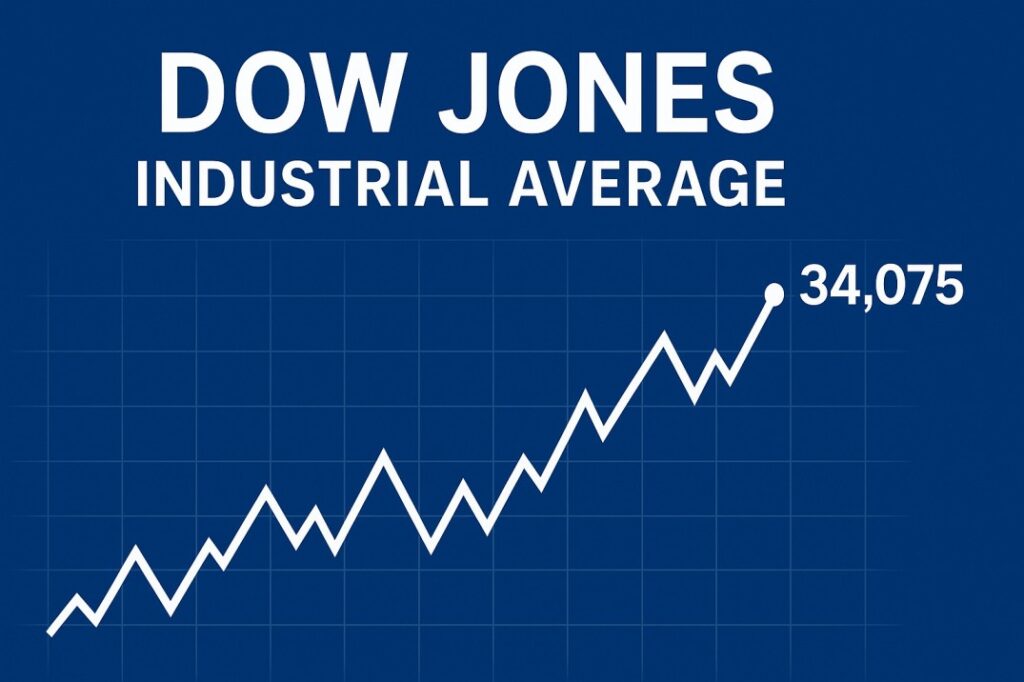
The Dow Jones Industrial Average isn’t just another stock market index. It’s the financial equivalent of a century-old heartbeat monitor, measuring the health and mood of America’s most influential companies.
Even if you’re not an active trader, you’ve likely heard news headlines like “The Dow hits another all-time high” or “The Dow drops 500 points.” That’s because the world still leans on the Dow for a quick read on economic sentiment.
But what makes this index so enduring-even in 2025, when markets are more complex than ever?
Let’s break it down with clarity, fresh insights, and trustworthy sources you can explore along the way.
What Exactly Is the Dow? A Blend of History, Simplicity & Market Psychology
Born in 1896 – From Industrial America to Today’s Blue-Chip Titans
The Dow started with just 12 companies, most of which were tied to heavy manufacturing. Its evolution reflects the transformation of the U.S. economy itself. If you’re curious about how it all began, Techopedia’s historical explanation of the DJIA gives a great overview:
👉 https://www.techopedia.com/definition/dow-jones-industrial-average-djia
Today, the index includes 30 major companies across sectors like finance, tech, healthcare, and consumer goods-firms that editors at S&P Dow Jones Indices deem representative of America’s economic backbone.
How the Dow Is Calculated (and Why That Matters)
The Dow uses a price-weighted formula-meaning stocks with higher share prices influence the index more than lower-priced ones. It’s a quirky methodology by modern standards, but it’s part of what makes the Dow unique.
If you want a deeper, visual breakdown of how the index evolved through the decades, Statmuse’s long-term Dow chart offers a clear timeline of growth and volatility:
👉 https://www.statmuse.com/money/ask/dow-jones-chart-from-1975-to-2025
Dow vs. S&P 500 – A Quick, Clear Comparison
One reason investors still debate the Dow’s relevance is because broader indices like the S&P 500(for more information about S&P 500 Fund: Click Here) offer more diversified market coverage. Here’s a simple snapshot:
| Feature | Dow Jones Industrial Average | S&P 500 |
|---|---|---|
| Number of companies | 30 | 500+ |
| Weighting method | Price-weighted | Market-cap weighted |
| Sector coverage | Concentrated but influential blue chips | Wide coverage across all sectors |
| Usefulness | Great for sentiment & headlines | Better for full-market representation |
If you’d like to expand your understanding of how major stock indices work in general, this Investopedia guide to market indices is helpful:
👉 https://www.investopedia.com/terms/s/stockmarketindex.asp
What 2025 Reveals About the Dow’s Momentum
A Year of Record Highs
2025 has delivered several headline-making milestones. The Dow crossed the 45,000, 46,000, and 47,000 levels—sometimes faster than analysts predicted. A helpful overview of these milestones can be found in Grokipedia’s collection of Dow closing records:
👉 https://grokipedia.com/page/Closing_milestones_of_the_Dow_Jones_Industrial_Average
The rally was powered by strong earnings, robust consumer spending, and investor optimism about economic resilience.
But Not Without Volatility
The run wasn’t smooth. March 2025 delivered one of the worst monthly pullbacks since 2022. If you want to explore the data behind that correction, Market Index History’s March 2025 performance report breaks it down:
👉 https://www.marketindexhistory.com/historical-insights/2025/dow-jones-industrial-average-march-2025-performance.html
This combination of highs and pullbacks makes the Dow a fascinating lens for studying how investors react to inflation news, interest rate speculation, and global uncertainty.
What the 2025 Dow Rally Really Signals
Having observed markets closely over the past decade, three powerful trends reflected in the Dow’s 2025 journey:
1. A Rotation Toward Stability
Investors are drifting from high-flying, volatile growth stocks toward established, dependable blue-chip companies—the very companies represented in the Dow. In uncertain times, investors crave predictability.
2. Renewed Faith in Legacy Industries
Despite the hype around AI and tech innovation, the 2025 rally shows that traditional sectors—banking, healthcare, manufacturing—still form the bedrock of investor confidence.
3. A Reminder That the Dow Isn’t the Whole Market
Because the index is price-weighted, a handful of high-priced stocks can distort the picture. A rising Dow doesn’t always mean the entire market is thriving. That’s why many investors pair Dow exposure with broader ETFs or diversified portfolios.
What Global & Indian Investors should learn from the Dow
If you’re analyzing the U.S. market from abroad (including from India), here are a few takeaways:
- Use the Dow as a sentiment barometer—not a complete market map.
- Consider broader U.S. indices for long-term investing, especially if you prefer diversification.
- Watch the dollar’s impact. Gains in the Dow may shift once converted into your local currency.
- Mix growth and stability. A balanced approach helps weather market volatility.
These insights become especially useful when planning international diversification or investing via global ETFs.
Why the Dow Still Matters in a Modern Market
For all its limitations, the Dow remains one of the most-watched financial indicators on the planet. Its simplicity helps. Its familiarity helps even more. When the Dow moves sharply, it becomes a marker of fear-or confidence-felt around the world.
And in an age of complex financial instruments and algorithmic trading, the Dow’s century-old methodology is almost comforting. It reminds us that some financial truths don’t change: investors still care about big, influential companies and what their performance says about the broader economy.
Conclusion – The Dow’s Story Is Really the Story of Market Sentiment
The Dow Jones Industrial Average remains a powerful market signal in 2025. Its record highs highlight renewed confidence, while its corrections reveal the emotional undercurrents of global investing.
Whether you’re a seasoned investor or just getting started, understanding the Dow helps you make sense of market headlines-and make smarter decisions for your portfolio.
Disclaimer: The content provided is for educational and informational purposes only and should not be considered financial, investment, insurance, or legal advice.