

Last Updated on 8 February 2026
If you’ve ever scrolled through financial news or social media, you’ve probably seen the word cryptocurrency spark heated debates, wild predictions, and million-dollar success stories. Some call it the future of finance; others call it digital gambling. But beyond the hype, what exactly makes cryptocurrency so disruptive-and why is it still relevant despite market crashes, regulations, and skepticism?
In this guide, we’ll dive deep into the world of cryptocurrency with clarity, simplicity, and a fresh perspective. Whether you’re curious, cautious, or already exploring the space, this article brings research-backed insights and real-world experiences together to help you understand what truly matters.
What Exactly Is Cryptocurrency? (In the Clearest Way Possible)
Cryptocurrency is digital money secured by blockchain technology, designed to operate without banks, governments, or central authorities. It allows people to send money globally in minutes-securely, transparently, and often with lower fees.
Unlike traditional currencies, cryptocurrencies are:
- Decentralized
- Borderless
- Immutable (tamper-proof)
- Publicly verifiable
If that sounds complex, think of it like this:
Cryptocurrency is to traditional money what email was to postal letters-faster, more efficient, and built for the digital age.
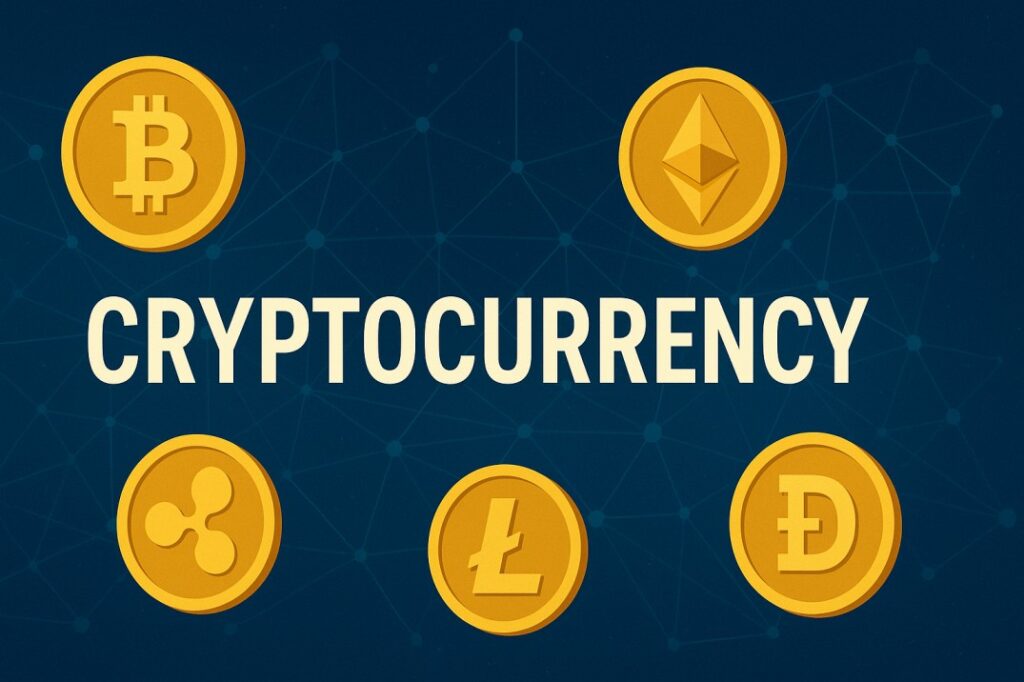
Some of the most well-known cryptocurrencies include:
- Bitcoin (BTC)
- Ethereum (ETH)
- Solana (SOL)
- Ripple (XRP)
- Litecoin (LTC)
The Technology Behind the Magic: Blockchain in Simple Terms
To understand cryptocurrency, you need to understand blockchain-but only at a practical level.
A blockchain is a digital ledger stored across thousands of computers. Every transaction becomes a “block,” and blocks are linked chronologically.
Why this matters:
- No single entity controls it
- It’s nearly impossible to hack
- Every transaction is visible to anyone
Platforms like Ethereum take this further by enabling smart contracts, which are self-executing agreements without intermediaries. These power things like NFTs, decentralized apps, decentralized exchanges (DEXs), and more.
Cryptocurrency vs. Traditional Assets (A Clear Comparison)
Here’s a simple comparison table to help you see where cryptocurrency stands today:
| Feature | Cryptocurrency | Stocks | Gold | Bank Deposits |
|---|---|---|---|---|
| Ownership | 100% self-controlled | Company shares | Physical asset | Bank-controlled |
| Liquidity | High (24/7 trading) | High | Medium | High |
| Volatility | Very High | Medium | Low | Very Low |
| Regulation | Limited / evolving | Strong | Moderate | Strong |
| Accessibility | Global, 24/7 | Market hours only | Varies | Country-specific |
| Growth Potential | Extremely High | High | Limited | Very Low |
| Risk Level | Very High | High | Medium | Low |
Why Cryptocurrency Became a Global Phenomenon
Cryptocurrency didn’t rise by accident. Its growth stems from real frustrations in traditional finance:
1. Lack of Trust in Banks
Post-2008, distrust toward centralized institutions pushed people toward alternatives like Bitcoin-designed specifically to avoid bank failures.
2. Inflation & Declining Currency Value
Countries facing high inflation-Argentina, Turkey, Nigeria-saw massive crypto adoption as people sought stable digital stores of value.
3. Easier Global Payments
Sending money to another country through traditional banks is slow and expensive. Crypto solves this almost instantly.
4. Investment Opportunities
Early investors saw life-changing gains. Although risky, the potential for outsized returns draws millions of new investors yearly.
The Three Major Types of Cryptocurrencies (You Should Know)
1. Store-of-Value Coins
Bitcoin is the leader here, often compared to “digital gold.” These coins are meant to hold value over the long term.
2. Utility Tokens (Most Popular Category)
Ethereum, Solana, BNB—these tokens power ecosystems and enable smart contracts, crypto apps, and decentralized finance (DeFi).
3. Stablecoins
USDT, USDC, DAI-stablecoins are pegged to the US dollar and used for:
- Trading
- Remittances
- DeFi lending
- Payments
A Real-World Perspective: My First Experience With Cryptocurrency
When I first bought cryptocurrency, I wasn’t chasing profits. I simply wanted to test how it works. The surprising part?
- Opening a crypto wallet took less than 2 minutes.
- Sending money across borders took 30 seconds.
- Fees were shockingly low compared to banks.
It wasn’t the price movement that impressed me-it was the efficiency.
That moment made me realize: whether or not people invest in crypto, the technology behind it is too powerful to ignore.
Benefits of Cryptocurrency (Backed by Real Market Insights)
1. High Returns (But With High Risk)
Bitcoin has outperformed every major asset in the last decade.
2. Financial Freedom
You can move funds without permission from a bank or government.
3. Transparency
Every transaction is verifiable on the blockchain.
4. Global Accessibility
You only need a smartphone.
5. Innovation
Crypto powers Web3, DeFi, NFTs, tokenization, and more.
But It’s Not Perfect: Risks You MUST Understand
Cryptocurrency also carries significant risks:
1. Extreme Volatility
Prices can fall 30-40% in a week.
2. Regulatory Uncertainty
Governments worldwide continue to debate crypto laws.
3. Hacking & Scams
Centralized exchanges, wallets, and projects have been hacked.
4. No Recovery if You Lose Wallet Keys
Crypto places full responsibility on the user.
To navigate safely:
- Use hardware wallets
- Avoid new or suspicious tokens
- Use trusted exchanges
- Learn basic risk management
The Future of Cryptocurrency: What’s Coming Next?
Industry researchers predict major shifts:
1. Real-World Asset Tokenization
Stocks, gold, real estate → all could be tokenized.
2. AI + Crypto
AI agents may eventually use crypto for automated payments.
3. Central Bank Digital Currencies (CBDCs)
Over 100+ countries are already building CBDCs.
4. Mainstream Institutional Adoption
Banks, hedge funds, companies-everyone is entering crypto.
As the cryptocurrency space continues evolving, staying informed is crucial for making smarter long-term decisions. Reliable research hubs like CoinDesk and Messari provide in-depth market analysis, industry updates, and project insights to help investors cut through the noise. For those interested in regulation and policy shifts, the IMF’s digital asset research offers a global perspective on how governments are shaping the future of crypto. Exploring these trusted sources not only expands your understanding but also empowers you to navigate the digital asset landscape with confidence.
Conclusion: Is Cryptocurrency Right for You?
Cryptocurrency is not just digital money; it’s an entire financial revolution-one that challenges how we save, invest, and move money globally. But like any new technology, it comes with risks and learning curves.
If you’re willing to learn, diversify, and manage risk intelligently, cryptocurrency can open doors to new opportunities. If you’re not, it’s still worth understanding-because it’s shaping the future of money whether we invest in it or not.
Disclaimer: The content provided is for educational and informational purposes only and should not be considered financial, investment, insurance, or legal advice.